Table of Contents
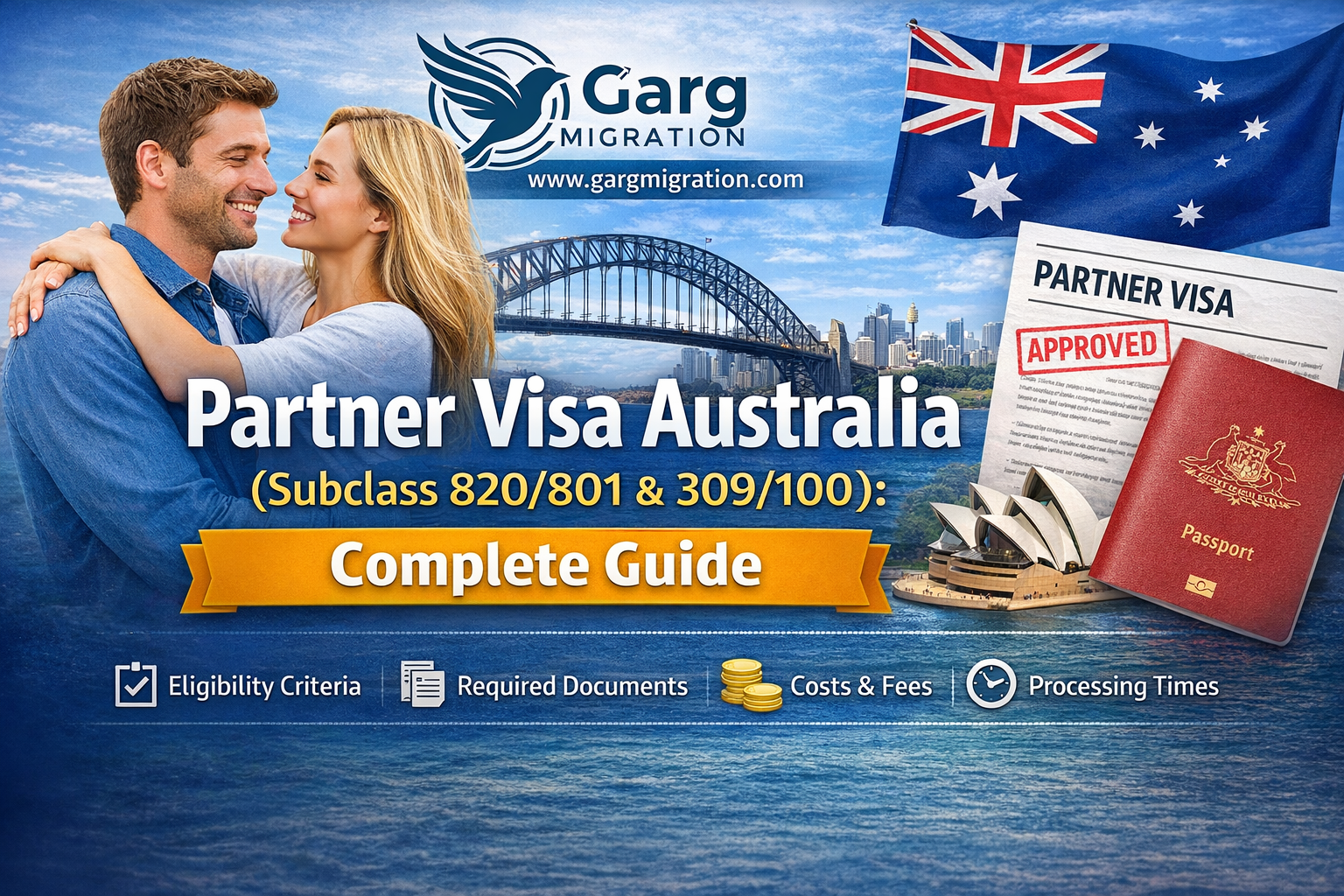
TogglePartner Visa (Subclass 820/801 & 309/100) : Complete Guide 2026
Reuniting with your partner in Australia is an exciting journey that starts with understanding the Australian Partner Visa program. Whether you’re applying from within Australia or from another country, the partner visa pathway helps couples build their lives together. This guide explains everything you need to know about Australian Partner Visas, including the onshore subclasses 820/801 and offshore subclasses 309/100.
Understanding Australian Partner Visas
Australia has two main partner visa pathways based on where you apply from. The Subclass 820/801 visa is for applicants already in Australia (onshore), while the Subclass 309/100 visa is for those applying from outside Australia (offshore). Both pathways follow a two-stage process: a temporary visa followed by a permanent visa about two years later.
The Australian partner visa program serves married couples, de facto partners, and same-sex couples in genuine, ongoing relationships with Australian citizens, permanent residents, or eligible New Zealand citizens. The program aims to reunite families while upholding the integrity of Australia’s immigration system.
Onshore Partner Visa: Subclass 820/801
Subclass 820: Temporary Partner Visa
The Subclass 820 visa is the temporary stage for applicants applying from within Australia. When you submit your application onshore, you automatically apply for both the temporary 820 and permanent 801 visas at the same time, though they are assessed in two stages.
Applicants granted a Subclass 820 visa can live, work, and study in Australia while waiting for their permanent visa to be processed. One significant benefit of applying onshore is that you usually receive a bridging visa right away, allowing you to stay legally in Australia during processing. This bridging visa gives you work rights and keeps your status lawful even if your current visa expires.
Subclass 801: Permanent Partner Visa
About two years after you submit your initial application, you can apply for the Subclass 801 permanent partner visa. This assessment checks if your relationship is ongoing and genuine. If you are approved, the Subclass 801 visa grants you permanent residency in Australia with full rights to live, work, and study indefinitely.
For the permanent stage, you need to show that you and your partner still have a genuine and ongoing relationship. You’ll need evidence of your life together over the two-year period, including updated financial documents, photos, statutory declarations, and proof of living together.
Offshore Partner Visa: Subclass 309/100
Subclass 309: Provisional Partner Visa
The Subclass 309 visa is the temporary stage for applicants outside Australia. Similar to the onshore pathway, offshore applicants apply for both the provisional 309 and the permanent 100 visas together, but these are also processed in two stages.
A key difference for offshore applications is that you need to be outside Australia when the Subclass 309 visa is granted. Once you’re granted this visa, you can enter Australia and enjoy the benefits of living, working, and studying while waiting for your permanent visa assessment. Processing times for offshore applications can be longer than for onshore, often taking over two years for the initial temporary visa grant.
Subclass 100: Permanent Partner Visa
The Subclass 100 permanent partner visa is assessed about two years after your initial application. You must show that your relationship with your partner is still genuine and has continued throughout the waiting period. When approved, you receive permanent residency with the same rights as onshore permanent visa holders.
Eligibility Requirements for Australian Partner Visas
Relationship Requirements
Your relationship must be genuine and ongoing, meeting Australian criteria. For married couples, you need to provide a valid marriage certificate recognized under Australian law. The marriage must be legally valid in the place where it took place.
For de facto relationships, you and your partner should have lived together in a genuine domestic relationship for at least 12 months before applying. Exceptions to the 12-month requirement include situations where you have a child together, your relationship is registered with an Australian authority, or special circumstances prevent you from meeting this requirement.
Immigration authorities evaluate relationships based on four key factors: financial aspects of your relationship, household arrangements, social aspects showing public acknowledgment of your relationship, and your commitment to each other. Providing strong evidence in all four areas seriously strengthens your application.
Sponsor Requirements
Your Australian partner must be an Australian citizen, permanent resident, or eligible New Zealand citizen. They need to be at least 18 years old and willing to sponsor you for both visa stages.
There are limits on sponsorship. Your partner cannot have sponsored more than two partner visa applicants in their lifetime. If they have sponsored someone before, at least five years must have passed since. Additionally, if your partner received a partner visa themselves, they cannot sponsor someone else for five years after their own visa was granted.
Character requirements for sponsors are strict. Those with criminal convictions related to family violence, domestic violence, or violent crimes may be barred from sponsoring a partner visa. This policy protects vulnerable visa applicants.
Health and Character Requirements
All partner visa applicants must undergo health checks by approved doctors. These checks ensure you do not have conditions that pose a significant public health risk or would place excessive burden on Australia’s healthcare system. Common health issues, like diabetes or asthma, usually don’t affect visa outcomes unless complications make treatment expensive.
Character requirements include police clearance certificates from every country where you’ve lived for 12 months or more in the past 10 years since you turned 16. Criminal records, outstanding warrants, or links to criminal groups can lead to visa refusal. Minor traffic offenses do not typically affect character assessments.
Application Process and Documentation
Applying for an Australian partner visa needs careful preparation and thorough documentation. The process begins with gathering evidence of your relationship, completing health checks and police clearances, and filling out detailed application forms through the Department of Home Affairs’ ImmiAccount system.
Essential documents include identity documents for both partners, proof of your sponsor’s status in Australia, marriage certificate or evidence of a de facto relationship, and relationship evidence covering financial, household, social, and commitment aspects. Statutory declarations from friends and family who know your relationship well can also be helpful.
Financial evidence should show genuine financial interdependence, including joint bank accounts, shared bills and expenses, joint loans or mortgages, and evidence of financial support between partners. Household evidence includes joint leases or property ownership, utility bills in both names, photos of your shared home, and mail addressed to both partners.
Social evidence proving public acknowledgment of your relationship includes declarations from friends and family, photos from various events, travel bookings, social media evidence, and joint memberships in organizations. Commitment evidence shows the depth of your relationship through communication records, knowledge of each other’s backgrounds, future plans, and support during tough times.
Processing Times and Costs
Processing times for Australian partner visas vary widely. Most applications now take between 24 to 36 months for the temporary visa stage, with some cases taking over three years depending on their complexity. The permanent stage usually takes 12 to 18 months from when you become eligible.
The application fee for Australian partner visas is significant, currently over AUD $9,000 for the main applicant. Additional fees apply for dependent children added to the application. These fees are non-refundable, even if your application is denied, so thorough preparation is crucial.
Besides visa fees, you should budget for police clearances, health examinations, certified document translations if your documents are not in English, professional photographs, and possibly migration agent fees if you seek professional help. Total costs can easily exceed AUD $12,000 to $15,000 when considering all expenses.
Rights and Conditions During Processing
While you hold a Subclass 820 visa or bridging visa during onshore processing, you generally have full work rights, can study in Australia (though without access to government student loans), can enroll in Medicare for healthcare access, and can travel outside Australia if you have a valid bridging visa with travel allowed.
One important condition for onshore applicants is that you must stay in your relationship with your sponsor. If your relationship ends before you secure the permanent visa, your application may be denied unless special circumstances apply, like domestic violence or the death of your partner.
Offshore Subclass 309 visa holders have similar rights once in Australia, but they may face different travel conditions. Both visa types do not allow access to certain social security payments during the temporary stage.
Pathway to Australian Citizenship
After holding your Subclass 801 or 100 permanent partner visa, you can apply for Australian citizenship if you meet residency requirements. Generally, you need to have lived in Australia for four years, with at least 12 months as a permanent resident, and not have been absent for more than 12 months in total during that period.
Citizenship applications require proving basic English skills, knowledge of Australia and citizenship responsibilities, and good character. Once granted citizenship, you will have full voting rights, the ability to apply for an Australian passport, and an easier process to sponsor family members.
When Relationships Break Down
Australia recognizes that relationships sometimes end, and there are provisions to protect vulnerable visa applicants. If your relationship ends due to family or domestic violence, you may still receive your permanent visa if you provide proof such as police reports, court documents, or statements from medical professionals or social workers.
If you and your partner have a child, relationship breakdown does not automatically affect your visa. You can keep your application going and may receive permanent residency based on your parenting relationship with your Australian citizen or permanent resident child.
The death of your sponsor is another situation that allows your visa application to continue even after the relationship ends. Compassionate considerations apply in these sad cases, and you may still receive a visa based on the genuine relationship that existed.
Tips for a Successful Partner Visa Application
Success in partner visa applications comes down to careful preparation and solid evidence. Start gathering evidence of your relationship well before applying, as evidence collected naturally over months and years is stronger than what is rushed before applying.
Be honest and clear throughout your application. Immigration officers are trained to spot inconsistencies or false information. If parts of your relationship or history are complex, explain them clearly and provide context instead of trying to hide them.
Keep your evidence organized with a detailed index, which will help case officers assess your application. Group your evidence by the four relationship categories and arrange documents chronologically within each group.
Maintain regular contact if you are in a long-distance relationship. Keep records of calls, messages, and visits. Clearly explain why you’ve been apart and show your plans for permanent living together in Australia.
Consider getting professional help from registered migration agents, especially if your case includes complications like previous visa refusals, relationship issues, or character matters. Migration agents are familiar with current policies and can help present your case well.
Why Choose Garg Migration
Navigating the Australian partner visa process can feel overwhelming, but you don’t have to face it alone. At Garg Migration, we specialize in Australian partner visas and have considerable experience helping couples reunite successfully. Our team of registered migration agents knows the details of Subclass 820/801 and 309/100 visas and offers personalized guidance for your unique situation.
We help with all aspects of your application, ensuring that all documents meet Department of Home Affairs standards, compiling relationship evidence across all assessment areas, and communicating with immigration authorities on your behalf during the process. Our success rate reflects our dedication to reuniting families and our understanding of Australian immigration law.
Contact Garg Migration today for a consultation about your partner visa journey. Let our expertise work for you and increase your chances of approval so you can reunite with your loved one in Australia.
Frequently Asked Questions (FAQs)
1. What’s the difference between onshore (820/801) and offshore (309/100) partner visas?
Onshore visas (820/801) are for people already in Australia. They can stay during processing with a bridging visa that allows them to work. Offshore visas (309/100) are for those outside Australia who must wait overseas until their temporary visa is approved. Processing times and costs are similar, but the key difference is where you wait during processing.
2. How long does it take to get an Australian partner visa?
Processing times usually range from 24 to 36 months for the temporary visa stage, though some applications may take longer. The permanent stage is assessed about two years after your initial application and typically takes an extra 12 to 18 months. Overall, the time from application to permanent residency often spans three to four years.
3. Can I work in Australia while my partner visa is being processed?
Yes, if you’re applying onshore with a Subclass 820 visa, you usually get a bridging visa with full work rights right after you apply. This lets you work without limits while waiting for your visa decision. Offshore applicants cannot work in Australia until their Subclass 309 visa is granted and they enter the country.
4. How much does an Australian partner visa cost?
The current visa application fee is more than AUD $9,000 for the main applicant, which covers both the temporary and permanent stages. Additional costs include police checks, health exams, document certifications, and possibly migration agent fees. Total expenses usually range from AUD $12,000 to $15,000 or more.
5. What happens if my relationship ends before I get permanent residency?
If your relationship ends during the temporary visa stage, your application may be denied unless special circumstances apply. Exceptions include a relationship breakdown due to domestic or family violence, having a child together with your sponsor, or the death of your sponsor. You must provide evidence to support these situations.
6. Do I need to be married to apply for a partner visa?
No, marriage isn’t necessary. Australia recognizes both married and de facto relationships. De facto couples must show that they’ve lived together in a genuine domestic relationship for at least 12 months before applying, though there are exceptions for couples with children together or registered relationships.
7. Can same-sex couples apply for Australian partner visas?
Absolutely. Australia’s partner visa program is inclusive and treats same-sex couples exactly like opposite-sex couples. The same eligibility requirements, assessment criteria, and processes apply, regardless of the partners’ gender.
8. What if my sponsor has sponsored someone before?
Your sponsor cannot have sponsored more than two partner visa applicants in their lifetime. If they have sponsored someone before, at least five years must have passed since the last sponsorship. Additionally, if your sponsor was granted a partner visa themselves, they cannot sponsor anyone until five years after their own permanent visa was granted.
9. Can I include my children in my partner visa application?
Yes, dependent children can be included in your partner visa application. They must be under 18 years old, or between 18 and 23 and dependent on you, or over 18 with a disability that prevents them from working. Additional visa application fees apply for each dependent child included.
10. What evidence do I need to prove my relationship is genuine?
You need solid evidence in four areas: financial interdependence (joint accounts, shared expenses), household arrangements (proof of living together, joint lease), social recognition (photos, statements from friends and family), and commitment (communication records, future plans, knowledge of each other). Immigration authorities evaluate all four areas together to determine if your relationship is genuine and ongoing.
Disclaimer: This guide offers general information about Australian Partner Visas (Subclass 820/801 and 309/100). Immigration policies change regularly. For personalized advice regarding your situation, contact Garg Migration for professional help from registered migration agents who specialize in Australian partner visas.