Student Visa & Study Visa (Subclass 500) : Complete Guide 2026
Are you planning to study in Australia but are confused about the terminology and requirements? Many international students look for information about “student visa or study visa” and wonder if there’s a difference between these terms. Knowing the details of Australian student visas is essential for a successful application. Working with MARA-registered consultants like Garg Migration can greatly help your educational journey.
Table of Contents
ToggleStudent Visa or Study Visa: Understanding the Terminology
The terms “student visa” and “study visa” are often used the same way when discussing Australian immigration for education. In official Australian immigration language, the correct term is Student visa (subclass 500). However, many people search for “study visa” when looking for information about studying in Australia. Both terms refer to the same visa category.
Whether you’re searching for “student visa or study visa,” you are essentially looking for the same temporary visa that allows international students to live and study in Australia for the length of their enrolled course. This visa category replaced the earlier system of multiple student visa subclasses in 2016, making the application process simpler with a single subclass.
Understanding this distinction is important because using clear terms when dealing with the Department of Home Affairs and immigration consultants makes communication easier and helps avoid confusion during your application process.
What is the Australian Student Visa (Subclass 500)?
The Student visa (subclass 500) is Australia’s main visa category for international students who want to study full-time at an Australian educational institution. This visa allows you to:
– Enroll in Full-Time Study: Attend courses at registered Australian institutions, including universities, colleges, and language schools.
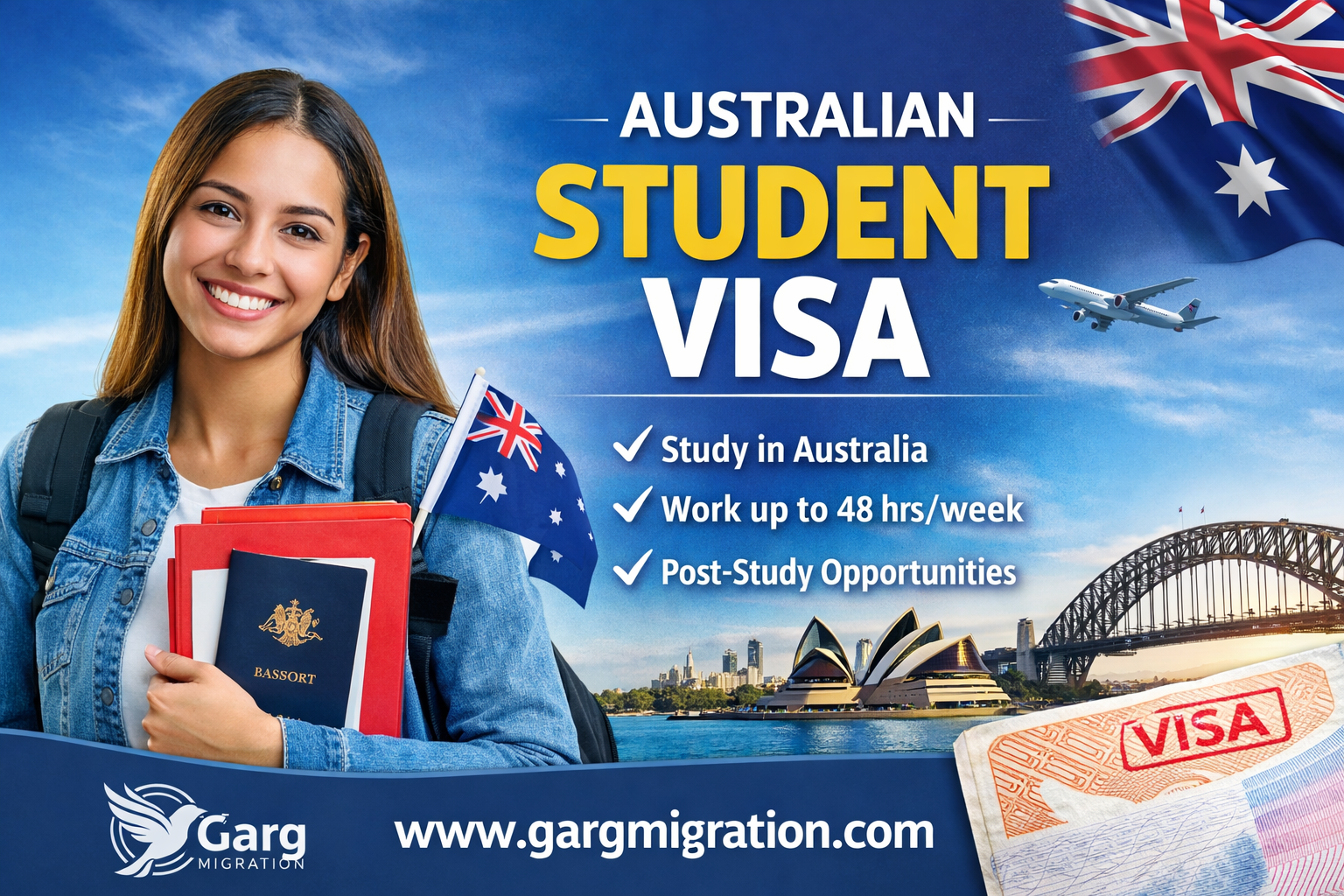
– Work Rights: Work up to 48 hours per fortnight during your course and unlimited hours during scheduled course breaks.
– Travel Flexibility: Travel in and out of Australia multiple times while your visa is valid.
– Family Inclusion: Include eligible family members as dependents on your visa application.
– Post-Study Opportunities: Move to post-study work visas or other visa categories after finishing your studies.
Garg Migration, as MARA-registered migration agents, specializes in guiding students through the complexities of the Student visa (subclass 500) application process. They ensure you meet all Department of Home Affairs requirements.
The Importance of MARA Registration When Choosing Migration Consultants
When exploring “student visa or study visa” options, you will find many migration agents and consultants offering services. However, not all consultants are equal. Working with unregistered agents can jeopardize your visa application and even lead to refusals.
MARA (Migration Agents Registration Authority) is the Australian government body that oversees migration advice. Only MARA-registered agents can legally provide immigration assistance for a fee in Australia.
Why Choose MARA-Registered Consultants Like Garg Migration?
– Legal Authorization: MARA-registered agents meet strict educational and experience requirements, ensuring they know Australian immigration law well.
– Professional Standards: Registered agents follow a strict Code of Conduct that governs their professional behavior and how they interact with clients.
– Continuous Education: MARA requires agents to continue their professional development, keeping them updated on changing immigration policies.
– Consumer Protection: Clients working with registered agents have the benefit of professional indemnity insurance and can access formal complaint options if standards aren’t met.
– Accountability: MARA investigates complaints and can take action against agents who don’t meet professional standards, providing clients with important protections.
Garg Migration’s MARA registration shows their commitment to providing ethical, professional, and legally compliant services to students wanting to study in Australia.
Eligibility Requirements for Australian Student Visas
Knowing the eligibility criteria is crucial when considering “student visa or study visa” applications. The Australian Department of Home Affairs has specific requirements that all applicants must meet:
– Confirmation of Enrolment (CoE): You need a Confirmation of Enrolment from an Australian educational institution registered on the Commonwealth Register of Institutions and Courses for Overseas Students (CRICOS). This document confirms your acceptance into a full-time course.
– Genuine Temporary Entrant (GTE) Requirement: The GTE requirement is a key and challenging part of student visa applications. Immigration officers check whether you genuinely plan to stay in Australia temporarily for study and return home after your course.
Garg Migration’s expertise in preparing strong GTE statements can significantly improve application success rates. They know what immigration officers look for and help clients present their situations persuasively.
– Financial Capacity: You must show sufficient financial resources to cover tuition fees, living expenses, travel costs, and expenses for family members traveling with you. The amount required varies based on your situation and how long you’ll study in Australia.
MARA-registered consultants like Garg Migration can help you understand the financial requirements for your case and prepare the needed evidence, whether through bank statements, loan documents, or sponsor declarations.
– English Language Proficiency: Most courses require proof of English language skills through tests like IELTS, TOEFL, PTE Academic, or other accepted exams. The required scores depend on your chosen course and institution.
Garg Migration offers clear advice on which English test to take and what scores to aim for to meet both course and visa conditions.
– Health and Character Requirements: All applicants must meet health requirements through medical exams by approved doctors. You also need to satisfy character requirements, usually shown through police records.
– Overseas Student Health Cover (OSHC): You must have adequate health insurance for your stay in Australia. OSHC covers medical expenses during your studies.
The Student Visa Application Process with Garg Migration
Navigating the “student visa or study visa” application process can be complicated and time-consuming. Here’s how Garg Migration’s MARA-registered consultants guide you through each step:
– Initial Consultation and Assessment: Your journey starts with a thorough assessment where consultants review your education, career goals, financial situation, and visa eligibility. This candid evaluation helps determine the best way to study in Australia and identifies potential challenges early.
– Course and Institution Selection: Based on your assessment, consultants suggest suitable courses and institutions that match your academic background, career goals, and budget. Garg Migration has relationships with various Australian universities and colleges, providing insights that help you make informed choices.
– Application to Educational Institutions: Consultants assist in preparing and submitting applications to your selected institutions, ensuring all required documents are properly arranged. They communicate with institutions on your behalf and help you secure your Confirmation of Enrolment.
– Document Preparation: Once you have your CoE, preparing documents becomes the next step in the visa application process. This includes academic transcripts, English test results, financial proof, passport copies, photos, and other supporting documents.
Garg Migration pays close attention to details to ensure that all documents meet Department of Home Affairs requirements, reducing the risk of delays or refusals due to incomplete or incorrect submissions.
– GTE Statement Development: The Genuine Temporary Entrant statement is perhaps the most vital part of your application. Garg Migration’s consultants work closely with you to create a persuasive narrative that addresses immigration officers’ concerns and shows your genuine intention to study temporarily in Australia.
– Visa Application Lodgement: After all documents are prepared and verified, consultants submit your visa application through the Department of Home Affairs online system. They ensure all information is correct and complete, which helps speed up processing times and reduces the chances of needing more information.
– Application Monitoring and Communication: During the assessment, Garg Migration monitors your application status and promptly responds to any requests from the Department of Home Affairs. They keep you updated at each stage and provide guidance if more information or documentation is needed.
– Pre-Departure Guidance: Once your visa is approved, consultants provide guidance on what to expect upon arrival. This includes details about procedures, accommodation, banking, telecommunications, and settling in Australia.
Common Challenges in Student Visa Applications
Many applicants searching for “student visa or study visa” requirements face challenges that can lead to refusals. Knowing these common issues helps you see the advantages of using MARA-registered consultants:
– Weak GTE Statements: Many refusals stem from applicants not convincingly showing their genuine temporary intentions. Immigration officers notice signs like weak ties to home countries, questionable course selections based on previous education, or lack of career planning.
– Insufficient Financial Evidence: Not providing enough financial proof or submitting documents that don’t meet Department of Home Affairs standards is a frequent reason for refusals. Some applicants misjudge the required amounts or submit documents in unacceptable formats.
– Incomplete Documentation: Missing documents, incorrect certifications, or failing to provide necessary translations can cause delays or refusals. The complexity of documentation requirements makes expert help essential.
– Previous Visa Refusals: Applicants with past Australian visa refusals may face increased scrutiny. MARA-registered consultants can assess your situation, see if reapplying is a good idea, and effectively address previous refusal reasons.
– Health and Character Issues: Some applicants are not aware of health or character requirements until their applications are reviewed. Undisclosed health conditions or criminal histories can complicate applications, requiring skilled guidance.
Benefits of Choosing Garg Migration for Your Student Visa
When deciding to handle your “student visa or study visa” application on your own or to get professional help, consider these benefits of working with Garg Migration:
– Expert Knowledge and Experience: MARA-registered consultants have extensive knowledge of Australian immigration law, policy, and procedures from formal education and ongoing training.
– Higher Success Rates: Applications prepared by registered agents have significantly higher approval rates compared to those lodged independently. This reflects their understanding of what immigration officers look for and their skill in presenting applications effectively.
– Time and Stress Savings: The visa application process has many steps, tight deadlines, and complex requirements. Professional consultants manage these details effectively, allowing you to focus on preparing for your studies and other important matters.
– Personalized Service: Garg Migration offers personalized attention to every client. They recognize that each applicant’s situation is unique. This tailored approach makes sure their advice aligns with your specific circumstances and goals.
– Ethical and Transparent Practices: As MARA-registered agents, Garg Migration follows strict ethical guidelines. They give honest assessments of your visa chances, maintain open communication, and refrain from promising outcomes that cannot be guaranteed.
– Comprehensive Support Beyond Visa Grant: Their support doesn’t stop once your visa is granted. Garg Migration continues to help with advice on visa conditions, extensions, and options for post-study work visas or permanent residency.
Planning Your Australian Education Journey
Getting a student visa is just the start of your educational experience in Australia. Proper planning ensures you make the most of this opportunity:
– Understanding Visa Conditions: Student visas have conditions you must follow, such as staying enrolled full-time, making satisfactory course progress, and adhering to work limits. Garg Migration helps you understand these conditions to avoid visa cancellations.
– Post-Study Pathways: Many international students wish to remain in Australia after finishing their studies. Garg Migration can inform you about post-study work visa options and possible paths to permanent residency, helping you plan smartly from the start.
– Maximizing Your Experience: Studying in Australia provides fantastic opportunities for personal growth, career development, and cultural experiences. Garg Migration guides you on making the most of your time in Australia while staying compliant with visa requirements.
Conclusion: Your Partner in Australian Education Success
- Choose a course eligible for PR in Australia
- Study at a CRICOS-registered institution
- Apply for Post-Study Work Visa (485)
- Gain skilled Australian work experience
- Complete skills assessment
- Lodge EOI for PR visas (189 / 190 / 491)
- Secure PR grant
This is the standard study to get PR in Australia pathway.
PR Pathway Courses Australia: Regional Advantage
Whether you are looking for information on “student visa or study visa” requirements or ready to start your application, picking the right migration consultant can greatly affect your success. Garg Migration’s MARA registration, professional knowledge, ethical standards, and commitment to client success make them a reliable partner for international students.
The Australian Student visa (subclass 500) opens doors to world-class education, valuable overseas experience, and potential opportunities in Australia. With appropriate guidance from registered professionals who understand Australian immigration complexities, your educational dreams can become a reality.
Frequently Asked Questions About Student Visas in Australia
FAQ 1: What is the difference between a student visa and a study visa?
Answer: There is no difference between a “student visa” and a “study visa.” These terms refer to the same visa category. The official Australian immigration term is Student visa (subclass 500). This visa allows international students to live and study in Australia for the duration of their course at a registered educational institution. Whether you search for “student visa” or “study visa,” you are looking for the same visa subclass. Garg Migration, as MARA-registered consultants, can clarify any confusion about visa terminology and help you through the application process for the Student visa (subclass 500).
FAQ 2: How long does it take to process an Australian student visa?
Answer: Student visa processing times vary based on factors like your country of origin, the completeness of your application, and the time of year you apply. Generally, 75% of applications are processed within 29 days, and 90% within 57 days. However, some applications may take longer if more information is needed or if there are health or character concerns. Applying during busy periods (November to February for semester intake) may lead to longer processing times. Garg Migration’s MARA-registered consultants help ensure your application is complete and accurate from the beginning, which usually results in faster processing. They suggest applying at least 6-8 weeks before your course starts to allow enough time for processing.
FAQ 3: Can I work while studying on a student visa in Australia?
Answer: Yes, Student visa (subclass 500) holders can work in Australia. You may work up to 48 hours every two weeks during your course sessions and unlimited hours during scheduled course breaks. This work limit helps make sure that your job doesn’t interfere with your studies. Your family members (if included as dependents on your visa) also have work rights, though their conditions may vary. It is important to understand and follow these work limits, as violating them can lead to visa cancellation. Garg Migration offers clear guidance on visa conditions, including work rights, so you know your entitlements and obligations under your student visa.
FAQ 4: What is the Genuine Temporary Entrant (GTE) requirement, and why is it important?
Answer: The Genuine Temporary Entrant (GTE) requirement is one of the most important parts of Australian student visa applications. It asks applicants to prove that they genuinely plan to stay in Australia temporarily for study and will return home after completing their course. Immigration officers consider factors such as your ties to your home country, immigration history, course relevance to your education and career plans, and your personal circumstances. A weak GTE statement is a common reason for student visa refusals. Garg Migration’s MARA-registered consultants have a lot of experience creating strong GTE statements that effectively address immigration officers’ concerns, which can greatly improve your chances of getting your visa approved.
FAQ 5: How much money do I need to show for a student visa application?
Answer: You must show you have enough money to cover tuition fees, living expenses, travel costs, and expenses for any family members traveling with you. As of 2024, the annual living cost requirement is about AUD 29,710 for the main applicant, AUD 10,394 for a partner, and AUD 4,449 per child. You must also show proof of return airfare (about AUD 2,000) and tuition fees for your first year. Financial evidence can include bank statements showing funds held for at least three months, loan approvals from recognized financial institutions, or sponsor declarations with supporting evidence. The exact requirements depend on your assessment level and situation. Garg Migration helps you understand the specific financial needs for your case and makes sure your financial evidence meets Department of Home Affairs standards.
FAQ 6: Do I need health insurance for my student visa?
Answer: Yes, having Overseas Student Health Cover (OSHC) is a must for the Student visa (subclass 500). OSHC must cover your entire stay in Australia and provides coverage for medical and hospital costs, ambulance services, and limited pharmaceutical benefits. You need to arrange OSHC before applying for your visa, and your policy details must be included in your application. Most Australian educational institutions work with OSHC providers and can help you get the right coverage. The cost varies depending on the provider and coverage duration, but it usually ranges from AUD 450-600 per year for one person. Garg Migration can assist you with OSHC requirements and ensure you have the right coverage for your visa application.
FAQ 7: Can I include my family members on my student visa application?
Answer: Yes, you can include eligible family members as dependents on your Student visa (subclass 500) application. Family members who can be included are your spouse or de facto partner and dependent children. Your family members will be granted visas with the same validity period as your student visa. Dependent partners can work up to 48 hours every two weeks, while dependent children can attend school in Australia. However, including family members increases the financial requirements for your application since you must demonstrate the ability to support them during your stay. There are also extra costs like visa application fees, health insurance, and living expenses. Garg Migration’s MARA-registered consultants can determine if including family members is the right choice for you and help you understand the additional requirements and costs involved.
FAQ 8: What happens if my student visa application is refused?
Answer: If your student visa application is refused, you will receive a detailed letter explaining the reasons for the refusal. Depending on your situation, you have several options: you may apply for a new visa that addresses the reasons for the refusal, request a review by the Administrative Appeals Tribunal (AAT) if you qualify, or look for other pathways. Past visa refusals can make future applications more difficult, as you must convincingly address the refusal reasons and show that circumstances have changed. Working with MARA-registered consultants becomes especially valuable in this case. Garg Migration can review your refusal letter, assess the reasons for the refusal, suggest whether reapplying or appealing is appropriate, and help you create a stronger application that addresses past concerns. Their expertise in handling complex cases greatly improves success rates for applicants with prior refusals.
FAQ 9: Why should I use a MARA-registered agent instead of applying myself or using an unregistered consultant?
Answer: Using a MARA-registered agent like Garg Migration offers important benefits over applying on your own or working with unregistered consultants. MARA registration means the agent has met strict educational and experience standards, showing their solid knowledge of Australian immigration law. Registered agents must follow a strict Code of Conduct, complete ongoing professional development, and hold professional indemnity insurance, giving you valuable consumer protections. Most importantly, only MARA-registered agents can legally provide immigration advice for a fee. Using unregistered consultants is illegal and can risk your visa application. Studies show that applications prepared by registered agents have much higher approval rates because they know what immigration officers look for and how to present applications well. Investing in professional services often pays off through time savings, reduced stress, and, most importantly, successful visa outcomes.
FAQ 10: What can I do after completing my studies on a student visa?
Answer: After finishing your qualification in Australia, you have several options based on your course level and career goals. The Temporary Graduate visa (subclass 485) allows recent graduates to live, work, and study in Australia temporarily after graduation. This visa has two streams: the Graduate Work stream (for specific trade qualifications, valid for 18 months) and the Post-Study Work stream (valid for 2-4 years depending on your qualification level). Many graduates use this time to gain Australian work experience, which can strengthen applications for skilled migration visas leading to permanent residency. Other options include applying for skilled migration visas if your occupation is on the relevant skilled occupation list, transitioning to employer-sponsored visas if you find suitable work, or exploring state nomination pathways. Planning your post-study options early in your education helps you make smart course and career decisions. Garg Migration offers comprehensive advice on post-study pathways and can help you move from a student visa to a graduate visa and potentially to permanent residency in Australia.